FAIR data is data which meets the 2016 FAIR principles of findability, accessibility, interoperability, and reusability (FAIR). The FAIR principles emphasize machine-actionability (i.e., the capacity of computational systems to find, access, interoperate, and reuse data with none or minimal human intervention) because humans increasingly rely on computational support to deal with data as a result of the increase in the volume, complexity, and rate of production of data. The abbreviation FAIR/O data is sometimes used to indicate that the dataset or database in question complies with the FAIR principles and also carries an explicit data‑capable open license. == FAIR principles published by GO FAIR == Findable The first step in (re)using data is to find them. Metadata and data should be easy to find for both humans and computers. Machine-readable metadata are essential for automatic discovery of datasets and services, so this is an essential component of the FAIRification process. F1. (Meta)data are assigned a globally unique and persistent identifier F2. Data are described with rich metadata (defined by R1 below) F3. Metadata clearly and explicitly include the identifier of the data they describe F4. (Meta)data are registered or indexed in a searchable resource Accessible Once the user finds the required data, they need to know how they can be accessed, possibly including authentication and authorisation. A1. (Meta)data are retrievable by their identifier using a standardised communications protocol A1.1 The protocol is open, free, and universally implementable A1.2 The protocol allows for an authentication and authorisation procedure, where necessary A2. Metadata are accessible, even when the data are no longer available Interoperable The data usually need to be integrated with other data. In addition, the data need to interoperate with applications or workflows for analysis, storage, and processing. I1. (Meta)data use a formal, accessible, shared, and broadly applicable language for knowledge representation I2. (Meta)data use vocabularies that follow FAIR principles I3. (Meta)data include qualified references to other (meta)data Reusable The ultimate goal of FAIR is to optimise the reuse of data. To achieve this, metadata and data should be well-described so that they can be replicated and/or combined in different settings. R1. (Meta)data are richly described with a plurality of accurate and relevant attributes R1.1. (Meta)data are released with a clear and accessible data usage license R1.2. (Meta)data are associated with detailed provenance R1.3. (Meta)data meet domain-relevant community standards The principles refer to three types of entities: data (or any digital object), metadata (information about that digital object), and infrastructure. For instance, principle F4 defines that both metadata and data are registered or indexed in a searchable resource (the infrastructure component). === Acceptance and implementation === Before FAIR, a 2007 OECD report was the most influential paper discussing similar ideas related to data accessibility. In January 2014, the Lorentz Centre at Leiden University hosted a workshop entitled "Jointly designing a data FAIRPORT" where the participants first formulated the FAIR principles. After further discussions, they were published in the March 2016 issue of Scientific Data. At the 2016 G20 Hangzhou summit, the G20 leaders issued a statement endorsing the application of FAIR principles to research. Also in 2016, a group of Australian organisations developed a Statement on FAIR Access to Australia's Research Outputs, which aimed to extend the principles to research outputs more generally. In 2017, Germany, Netherlands and France agreed to establish an international office to support the FAIR initiative, the GO FAIR International Support and Coordination Office. Other international organisations active in the research data ecosystem, such as CODATA or Research Data Alliance (RDA) also support FAIR implementations by their communities. FAIR principles implementation assessment is being explored by FAIR Data Maturity Model Working Group of RDA, CODATA's strategic Decadal Programme "Data for Planet: Making data work for cross-domain challenges" mentions FAIR data principles as a fundamental enabler of data driven science. The Association of European Research Libraries recommends the use of FAIR principles. A 2017 paper by advocates of FAIR data reported that awareness of the FAIR concept was increasing among various researchers and institutes, but also, understanding of the concept was becoming confused as different people apply their own differing perspectives to it. Guides on implementing FAIR data practices state that the cost of a data management plan in compliance with FAIR data practices should be 5% of the total research budget. In 2019 the Global Indigenous Data Alliance (GIDA) released the CARE Principles for Indigenous Data Governance as a complementary guide. The CARE principles extend principles outlined in FAIR data to include Collective benefit, Authority to control, Responsibility, and Ethics to ensure data guidelines address historical contexts and power differentials. The CARE Principles for Indigenous Data Governance were drafted at the International Data Week and Research Data Alliance Plenary co-hosted event, "Indigenous Data Sovereignty Principles for the Governance of Indigenous Data Workshop", held 8 November 2018, in Gaborone, Botswana. The lack of information on how to implement the guidelines have led to inconsistent interpretations of them. In January 2020, representatives of nine groups of universities around the world produced the Sorbonne declaration on research data rights, which included a commitment to FAIR data, and called on governments to provide support to enable it. In 2021, researchers identified the FAIR principles as a conceptual component of data catalog software tools, with the other components being metadata management, business context and data responsibility roles. In April 2022, Matthias Scheffler and colleagues argued in Nature that FAIR principles are "a must" so that data mining and artificial intelligence can extract useful scientific information from the data. There have been moves in the geosciences to establish FAIR data by use of decimal georeferencing However, making data (and research outcomes) FAIR is a challenging task, and it is challenging to assess the FAIRness. In 2020, the FAIR Data Maturity Model Working Group published a set of guidelines for assessing "FAIRness".
Nobody (username)
In many Unix variants, "nobody" is the conventional name of a user identifier which owns no files, is in no privileged groups, and has no abilities except those which every other user has. It is normally not enabled as a user account, i.e. has no home directory or login credentials assigned. Some systems also define an equivalent group "nogroup". == Uses == The pseudo-user "nobody" and group "nogroup" are used, for example, in the NFSv4 implementation of Linux by idmapd, if a user or group name in an incoming packet does not match any known username on the system. It was once common to run daemons as nobody, especially on servers, in order to limit the damage that could be done by a malicious user who gained control of them. However, the usefulness of this technique is reduced if more than one daemon is run like this, because then gaining control of one daemon would provide control of them all. The reason is that processes owned by the same user have the ability to send signals to each other and use debugging facilities to read or even modify each other's memory. Modern practice, as recommended by the Linux Standard Base, is to create a separate user account for each daemon.
EffectsLab Pro
EffectsLab Pro is a discontinued visual effects software product developed by FXhome. It has since been superseded by the FXhome HitFilm range. The company also produced a limited functionality version, EffectsLab Lite, containing just the Particle engine. A more extensive product, VisionLab Studio, combined the functionality of EffectsLab Pro and the company's CompositeLab Pro product with enhancements to both. == Effects Engines == The effects are generated by the program's effect engines: The Neon Light engine allows light beams to be drawn onto the video, allowing the generation of lightsaber-like weapons, neon lighting, fantasy glow effects and laser blasts. The Particle engine is used for particle effects, such as smoke, fire, explosions, and weather effects. The Muzzle Flash engine is designed for creating and animating muzzle flashes such as machine gun firing, tank blasts, etc. It's possible to rotate the created muzzle flash in 3D, making it the only engine with 3D use. The Optics engine is designed for creating artificial lens flares and light sources. It is useful for enhancing other light-based effects, and mimicking the distinctive flashes of light that accompany Star Wars' lightsaber battles. The Laser engine (introduced in EffectsLab Pro in late 2007) is designed as a simplified method of creating laser weapon effects, including the ability to add simulated perspective to the effect. == Presets == EffectsLab Pro allows the user to save the effects using presets. Since all effects are generated from settings in the different engines, it is fairly easy to generate an XML style description of the effect. It is also possible to share presets on FXhome's website.
Harmony (software)
Harmony is a Java-based software for creating high-definition music videos with 2D and 3D animations. The application was developed by Digital Chaotics, a company based in San Jose, California and established in 2010 by Ken and Leanna Scott. == History == During a March 1, 2011 interview published by The LIST magazine, Ken explained how he initially got into music and digital entertainment. According to Scott: “I came at it from both the art and the technology side. … I built one of the first digital audio synthesizers as an undergrad project back in 1979. It was a short jump from there to creating visuals with computers, too.” Taking inspiration from Fantasia – which Scott calls, “The greatest music video of all time” – he began writing software code for Harmony in late 2009, finishing the project in mid-2010. However, Scott has also said that the idea for Harmony began much earlier: I read a book in 1978 called Digital Harmony, by John H Whitney, Sr. (Interestingly, he was the father of the president of Digital Productions.) He said that there was a kind of visual art based on motion, and proposed theories about the underlying mathematical structure of visual harmony. So there's the book, combined with my desire to create art with computers-add a taste or two of things commonly used by college students during the 70's - and lots of Pink Floyd. Add it all up, and the seeds for Harmony were planted. My friends in school and at Floating Point Systems listened to me ranting about "making music videos with computers" incessantly. I'm sure it was both maddening and fascinating to see. == Features == Harmony runs on Windows 7 and Windows Vista. Currently, Digital Chaotics does not offer a macOS or Linux platform for the software. However, Harmony can be run on these platforms by running it on Windows in a virtual machine. == Harmony 2 == On November 1, 2011, Digital Chaotics released the 2.0 version of the Harmony software. Unlike the original version, the second release featured three product levels: Harmony 2 Express, Harmony 2 Pro, and Harmony 2 Extreme. The "Express" version was positioned as an entry-level, free release to allow users a chance to "test-drive" the software. The "Pro" version currently retails at $197, while the "Extreme" is priced at $397. These two versions, aimed more towards VJ and Fulldome theater usage, featured additional software capability and features such as higher resolution, more video formatting options, and more camera angles.
Autonomous things
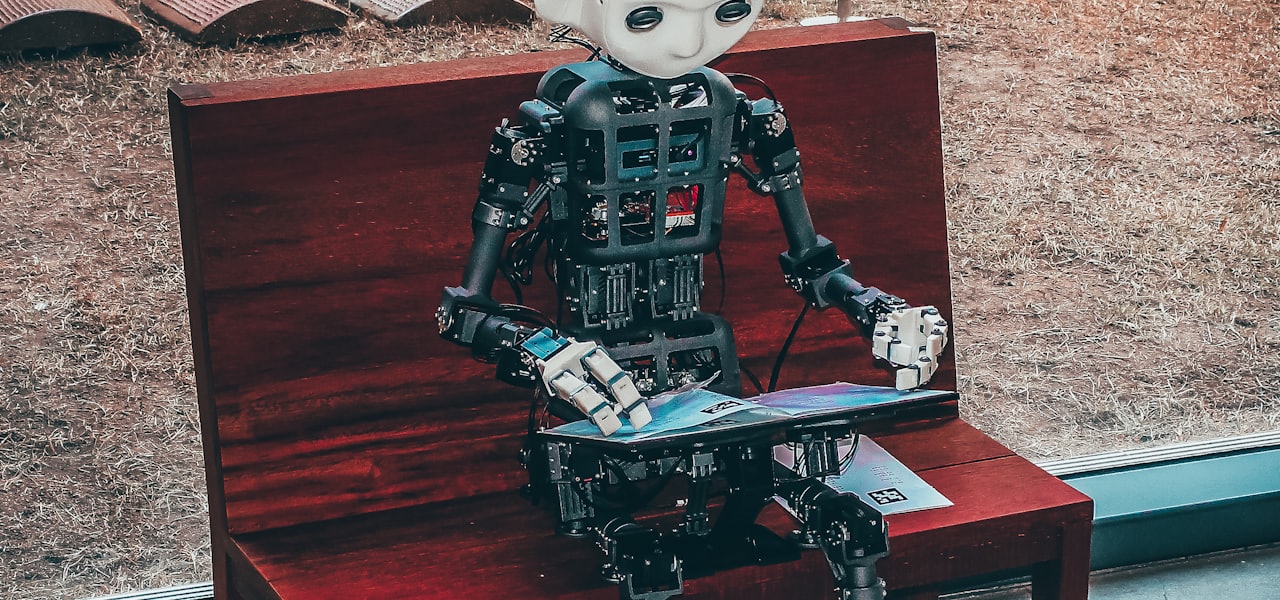
Autonomous things, abbreviated AuT, or the Internet of autonomous things, abbreviated as IoAT, is an emerging term for the technological developments that are expected to bring computers into the physical environment as autonomous entities without human direction, freely moving and interacting with humans and other objects. Self-navigating drones are the first AuT technology in (limited) deployment. It is expected that the first mass-deployment of AuT technologies will be the autonomous car, generally expected to be available around 2020. Other currently expected AuT technologies include home robotics (e.g., machines that provide care for the elderly, infirm or young), and military robots (air, land or sea autonomous machines with information-collection or target-attack capabilities). AuT technologies share many common traits, which justify the common notation. They are all based on recent breakthroughs in the domains of (deep) machine learning and artificial intelligence. They all require extensive and prompt regulatory developments to specify the requirements from them and to license and manage their deployment (see the further reading below). And they all require unprecedented levels of safety (e.g., automobile safety) and security, to overcome concerns about the potential negative impact of the new technology. As an example, the autonomous car both addresses the main existing safety issues and creates new issues. It is expected to be much safer than existing vehicles, by eliminating the single most dangerous element – the driver. The US's National Highway Traffic Safety Administration estimates 94 percent of US accidents were the result of human error and poor decision-making, including speeding and impaired driving, and the Center for Internet and Society at Stanford Law School claims that "Some ninety percent of motor vehicle crashes are caused at least in part by human error". So while safety standards like the ISO 26262 specify the required safety, there is still a burden on the industry to demonstrate acceptable safety. While car accidents claim every year 35,000 lives in the US, and 1.25 million worldwide, some believe that even "a car that's 10 times as safe, which means 3,500 people die on the roads each year [in the US alone]" would not be accepted by the public. The acceptable level may be closer to the current figures on aviation accidents and incidents, with under a thousand worldwide deaths in most years – three orders of magnitude lower than cars. This underscores the unprecedented nature of the safety requirements that will need to be met for cars, with similar levels of safety expected for other Autonomous Things.
Chinchilla (language model)
Chinchilla is a family of large language models (LLMs) developed by the research team at Google DeepMind, presented in March 2022. == Models == It is named "chinchilla" because it is a further development over a previous model family named Gopher. Both model families were trained in order to investigate the scaling laws of large language models. It claimed to outperform GPT-3. It considerably simplifies downstream utilization because it requires much less computer power for inference and fine-tuning. Based on the training of previously employed language models, it has been determined that if one doubles the model size, one must also have twice the number of training tokens. This hypothesis has been used to train Chinchilla by DeepMind. Similar to Gopher in terms of cost, Chinchilla has 70B parameters and four times as much data. Chinchilla has an average accuracy of 67.5% on the Measuring Massive Multitask Language Understanding (MMLU) benchmark, which is 7% higher than Gopher's performance. Chinchilla was still in the testing phase as of January 12, 2023. Chinchilla contributes to developing an effective training paradigm for large autoregressive language models with limited compute resources. The Chinchilla team recommends that the number of training tokens is twice for every model size doubling, meaning that using larger, higher-quality training datasets can lead to better results on downstream tasks. It has been used for the Flamingo vision-language model. == Architecture == Both the Gopher family and Chinchilla family are families of transformer models. In particular, they are essentially the same as GPT-2, with different sizes and minor modifications. Gopher family uses RMSNorm instead of LayerNorm; relative positional encoding rather than absolute positional encoding. The Chinchilla family is the same as the Gopher family, but trained with AdamW instead of Adam optimizer. The Gopher family contains six models of increasing size, from 44 million parameters to 280 billion parameters. They refer to the largest one as "Gopher" by default. Similar naming conventions apply for the Chinchilla family. Table 1 of shows the entire Gopher family: Table 4 of compares the 70-billion-parameter Chinchilla with Gopher 280B.
Pixel-art scaling algorithms
Pixel art scaling algorithms are graphical filters that attempt to enhance the appearance of hand-drawn 2D pixel art graphics. These algorithms are a form of automatic image enhancement. Pixel art scaling algorithms employ methods significantly different than the common methods of image rescaling, which have the goal of preserving the appearance of images. As pixel art graphics are commonly used at very low resolutions, they employ careful coloring of individual pixels. This results in graphics that rely on a high amount of stylized visual cues to define complex shapes. Several specialized algorithms have been developed to handle re-scaling of such graphics. These specialized algorithms can improve the appearance of pixel-art graphics, but in doing so they introduce changes. Such changes may be undesirable, especially if the goal is to faithfully reproduce the original appearance. Since a typical application of this technology is improving the appearance of fourth-generation and earlier video games on arcade and console emulators, many pixel art scaling algorithms are designed to run in real-time for sufficiently small input images at 60-frames per second. This places constraints on the type of programming techniques that can be used for this sort of real-time processing. Many work only on specific scale factors. 2× is the most common scale factor, while 3×, 4×, 5×, and 6× exist but are less used. == Algorithms == === SAA5050 'Diagonal Smoothing' === The Mullard SAA5050 Teletext character generator chip (1980) used a primitive pixel scaling algorithm to generate higher-resolution characters on the screen from a lower-resolution representation from its internal ROM. Internally, each character shape was defined on a 5 × 9 pixel grid, which was then interpolated by smoothing diagonals to give a 10 × 18 pixel character, with a characteristically angular shape, surrounded to the top and the left by two pixels of blank space. The algorithm only works on monochrome source data, and assumes the source pixels will be logically true or false depending on whether they are 'on' or 'off'. Pixels 'outside the grid pattern' are assumed to be off. The algorithm works as follows: A B C --\ 1 2 D E F --/ 3 4 1 = B | (A & E & !B & !D) 2 = B | (C & E & !B & !F) 3 = E | (!A & !E & B & D) 4 = E | (!C & !E & B & F) Note that this algorithm, like the Eagle algorithm below, has a flaw: If a pattern of 4 pixels in a hollow diamond shape appears, the hollow will be obliterated by the expansion. The SAA5050's internal character ROM carefully avoids ever using this pattern. The degenerate case: becomes: === EPX/Scale2×/AdvMAME2× === Eric's Pixel Expansion (EPX) is an algorithm developed by Eric Johnston at LucasArts around 1992, when porting the SCUMM engine games from the IBM PC (which ran at 320 × 200 × 256 colors) to the early color Macintosh computers, which ran at more or less double that resolution. The algorithm works as follows, expanding P into 4 new pixels based on P's surroundings: 1=P; 2=P; 3=P; 4=P; IF C==A => 1=A IF A==B => 2=B IF D==C => 3=C IF B==D => 4=D IF of A, B, C, D, three or more are identical: 1=2=3=4=P Later implementations of this same algorithm (as AdvMAME2× and Scale2×, developed around 2001) are slightly more efficient but functionally identical: 1=P; 2=P; 3=P; 4=P; IF C==A AND C!=D AND A!=B => 1=A IF A==B AND A!=C AND B!=D => 2=B IF D==C AND D!=B AND C!=A => 3=C IF B==D AND B!=A AND D!=C => 4=D AdvMAME2× is available in DOSBox via the scaler=advmame2x dosbox.conf option. The AdvMAME4×/Scale4× algorithm is just EPX applied twice to get 4× resolution. ==== Scale3×/AdvMAME3× and ScaleFX ==== The AdvMAME3×/Scale3× algorithm (available in DOSBox via the scaler=advmame3x dosbox.conf option) can be thought of as a generalization of EPX to the 3× case. The corner pixels are calculated identically to EPX. 1=E; 2=E; 3=E; 4=E; 5=E; 6=E; 7=E; 8=E; 9=E; IF D==B AND D!=H AND B!=F => 1=D IF (D==B AND D!=H AND B!=F AND E!=C) OR (B==F AND B!=D AND F!=H AND E!=A) => 2=B IF B==F AND B!=D AND F!=H => 3=F IF (H==D AND H!=F AND D!=B AND E!=A) OR (D==B AND D!=H AND B!=F AND E!=G) => 4=D 5=E IF (B==F AND B!=D AND F!=H AND E!=I) OR (F==H AND F!=B AND H!=D AND E!=C) => 6=F IF H==D AND H!=F AND D!=B => 7=D IF (F==H AND F!=B AND H!=D AND E!=G) OR (H==D AND H!=F AND D!=B AND E!=I) => 8=H IF F==H AND F!=B AND H!=D => 9=F There is also a variant improved over Scale3× called ScaleFX, developed by Sp00kyFox, and a version combined with Reverse-AA called ScaleFX-Hybrid. === Eagle === Eagle works as follows: for every in pixel, we will generate 4 out pixels. First, set all 4 to the color of the pixel we are currently scaling (as nearest-neighbor). Next look at the three pixels above, to the left, and diagonally above left: if all three are the same color as each other, set the top left pixel of our output square to that color in preference to the nearest-neighbor color. Work similarly for all four pixels, and then move to the next one. Assume an input matrix of 3 × 3 pixels where the centermost pixel is the pixel to be scaled, and an output matrix of 2 × 2 pixels (i.e., the scaled pixel) first: |Then . . . --\ CC |S T U --\ 1 2 . C . --/ CC |V C W --/ 3 4 . . . |X Y Z | IF V==S==T => 1=S | IF T==U==W => 2=U | IF V==X==Y => 3=X | IF W==Z==Y => 4=Z Thus if we have a single black pixel on a white background it will vanish. This is a bug in the Eagle algorithm but is solved by other algorithms such as EPX, 2xSaI, and HQ2x. === 2×SaI === 2×SaI, short for 2× Scale and Interpolation engine, was inspired by Eagle. It was designed by Derek Liauw Kie Fa, also known as Kreed, primarily for use in console and computer emulators, and it has remained fairly popular in this niche. Many of the most popular emulators, including ZSNES and VisualBoyAdvance, offer this scaling algorithm as a feature. Several slightly different versions of the scaling algorithm are available, and these are often referred to as Super 2×SaI and Super Eagle. The 2xSaI family works on a 4 × 4 matrix of pixels where the pixel marked A below is scaled: I E F J G A B K --\ W X H C D L --/ Y Z M N O P For 16-bit pixels, they use pixel masks which change based on whether the 16-bit pixel format is 565 or 555. The constants colorMask, lowPixelMask, qColorMask, qLowPixelMask, redBlueMask, and greenMask are 16-bit masks. The lower 8 bits are identical in either pixel format. Two interpolation functions are described: INTERPOLATE(uint32 A, UINT32 B). -- linear midpoint of A and B if (A == B) return A; return ( ((A & colorMask) >> 1) + ((B & colorMask) >> 1) + (A & B & lowPixelMask) ); Q_INTERPOLATE(uint32 A, uint32 B, uint32 C, uint32 D) -- bilinear interpolation; A, B, C, and D's average x = ((A & qColorMask) >> 2) + ((B & qColorMask) >> 2) + ((C & qColorMask) >> 2) + ((D & qColorMask) >> 2); y = (A & qLowPixelMask) + (B & qLowPixelMask) + (C & qLowPixelMask) + (D & qLowPixelMask); y = (y >> 2) & qLowPixelMask; return x + y; The algorithm checks A, B, C, and D for a diagonal match such that A==D and B!=C, or the other way around, or if they are both diagonals or if there is no diagonal match. Within these, it checks for three or four identical pixels. Based on these conditions, the algorithm decides whether to use one of A, B, C, or D, or an interpolation among only these four, for each output pixel. The 2xSaI arbitrary scaler can enlarge any image to any resolution and uses bilinear filtering to interpolate pixels. Since Kreed released the source code under the GNU General Public License, it is freely available to anyone wishing to utilize it in a project released under that license. Developers wishing to use it in a non-GPL project would be required to rewrite the algorithm without using any of Kreed's existing code. It is available in DOSBox via scaler=2xsai option. === hqnx family === Maxim Stepin's hq2x, hq3x, and hq4x are for scale factors of 2:1, 3:1, and 4:1 respectively. Each work by comparing the color value of each pixel to those of its eight immediate neighbors, marking the neighbors as close or distant, and using a pre-generated lookup table to find the proper proportion of input pixels' values for each of the 4, 9 or 16 corresponding output pixels. The hq3x family will perfectly smooth any diagonal line whose slope is ±0.5, ±1, or ±2 and which is not anti-aliased in the input; one with any other slope will alternate between two slopes in the output. It will also smooth very tight curves. Unlike 2xSaI, it anti-aliases the output. hqnx was initially created for the Super NES emulator ZSNES. The author of bsnes has released a space-efficient implementation of hq2x to the public domain. A port to shaders, which has comparable quality to the early versions of xBR, is available. Before the port, a shader called "scalehq" has often been confused for hqx. === xBR family === There are 6 filters in this family: xBR , xBRZ, xBR-Hybrid, Super xBR, xBR+3D and Super xBR+3D. xBR ("scale by rules"), cre